Laser cleaning technology is rapidly becoming one of the most effective methods for removing rust, paint, oxidation and industrial contamination without damaging the original surface underneath.
Its precision and non-abrasive process make it suitable for a wide range of industries and applications where traditional cleaning methods may be too aggressive or inefficient.
Metal Surfaces
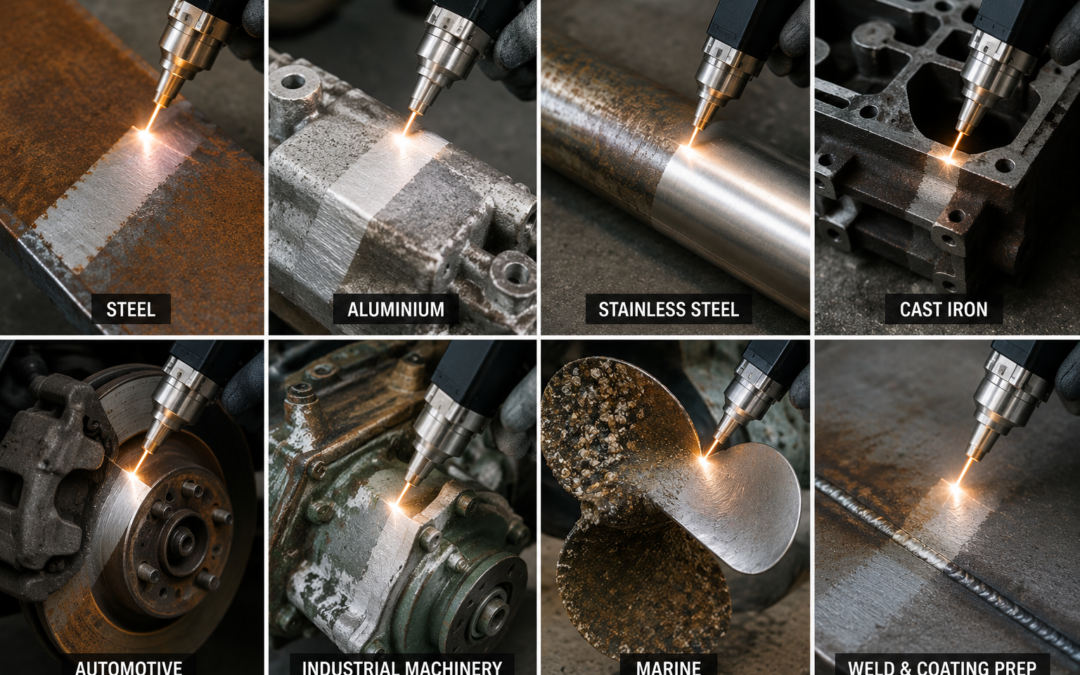
Metal is one of the most common materials cleaned with laser technology.
Laser cleaning can safely remove:
- rust
- oxidation
- oil residue
- coatings
- paint
- industrial contamination
while preserving the integrity of the base material.
This makes it ideal for:
- steel components
- aluminium parts
- stainless steel
- cast iron
- industrial machinery
Automotive Components
Laser cleaning is becoming increasingly popular within automotive restoration and maintenance.
It can be used on:
- engine parts
- suspension components
- brake assemblies
- chassis sections
- wheels and metal frames
The process helps restore metal surfaces without excessive abrasion, making it suitable for sensitive restoration projects.
Industrial Machinery
Factories and industrial environments often deal with contamination buildup, corrosion and residue on production equipment.
Laser cleaning can assist with:
- machinery restoration
- maintenance preparation
- weld cleaning
- surface preparation
- mould and tooling cleaning
Because the process is highly precise, it can target specific areas without affecting surrounding components.
Marine Applications
Marine environments create constant exposure to moisture and corrosion.
Laser cleaning can help remove:
- rust
- salt contamination
- marine buildup
- coatings
- oxidation
from metal components, tools and structural surfaces used in marine industries.
Surface Preparation Before Welding or Coating
Many industries use laser cleaning before welding, bonding or coating applications.
The process creates a cleaner surface which may improve:
- weld quality
- coating adhesion
- surface consistency
without introducing abrasive particles into the material.
Delicate Restoration Projects
One of the major advantages of laser cleaning is precision.
Compared to aggressive blasting methods, laser cleaning may be suitable for projects where preserving the original surface is important, including:
- restoration work
- heritage components
- detailed metal surfaces
- sensitive industrial parts
The level of precision depends on the machine setup, material type and contamination level.
Is Laser Cleaning Suitable for Every Surface?
Not every material responds the same way to laser cleaning.
The effectiveness depends on:
- material type
- contamination thickness
- coating type
- surface sensitivity
- laser settings
This is why proper assessment is important before starting any cleaning project.
Final Thoughts
Laser cleaning technology offers a versatile and modern solution for restoring a wide variety of surfaces across industrial, automotive and restoration sectors.
From rust removal and paint stripping to machinery maintenance and precision cleaning, laser technology continues to grow as an efficient and non-abrasive alternative to traditional cleaning methods.