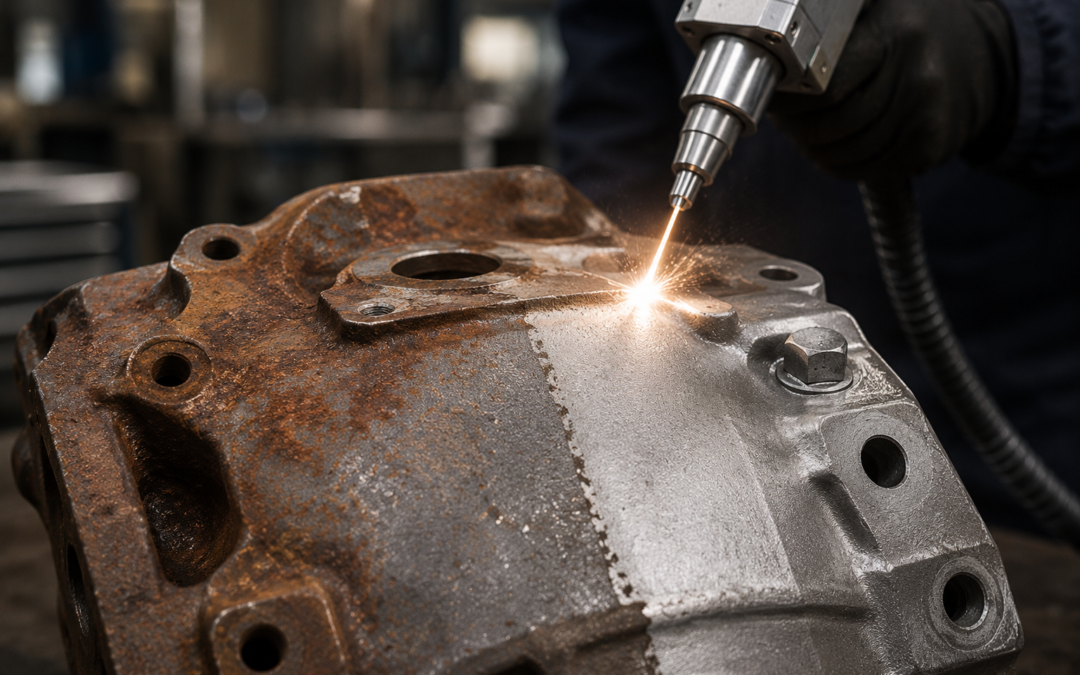
One of the most common questions people ask before using laser cleaning is whether the process can damage the underlying metal surface. This concern is understandable, especially when dealing with valuable machinery, automotive components, tooling, or restoration projects.
The short answer is that when performed correctly, laser cleaning is designed to remove contaminants while preserving the underlying metal.
Why People Worry About Surface Damage
Traditional cleaning methods often involve some level of surface abrasion.
For example:
• Sandblasting physically impacts the surface with abrasive media
• Grinding removes material through friction
• Wire brushing can leave scratches and marks
• Chemical cleaning may affect certain coatings and materials
Because laser cleaning uses concentrated energy, many people assume it works in the same way. In reality, the process is very different.
How Laser Cleaning Interacts With Metal
Laser cleaning works by targeting unwanted layers on the surface rather than the base material itself.
These unwanted layers may include:
• Rust
• Oxidation
• Paint
• Carbon deposits
• Grease and contaminants
• Surface coatings
The laser energy is absorbed by the contamination, which heats up rapidly and breaks away from the surface.
The underlying metal reflects a significant portion of the laser energy and is far less affected when the correct settings are used.
Why Laser Cleaning Is Considered Non Abrasive
Unlike blasting or grinding, laser cleaning does not rely on physical contact.
There are:
• No abrasive particles striking the surface
• No brushes scraping the metal
• No grinding discs removing material
This is why laser cleaning is commonly described as a non abrasive cleaning method.
Can Laser Cleaning Remove Base Metal?
In extreme situations, any powerful tool can damage a surface if used incorrectly.
Factors that influence the outcome include:
• Laser power settings
• Pulse duration
• Exposure time
• Material type
• Operator experience
Professional operators adjust these settings to ensure contaminants are removed without affecting the substrate.
For most cleaning applications, the goal is selective removal of contamination rather than removal of the metal itself.
Applications Where Surface Preservation Matters
Laser cleaning is often chosen specifically because it helps preserve delicate surfaces.
Common examples include:
Automotive Restoration
Classic cars often contain valuable components that owners do not want damaged by aggressive blasting methods.
Industrial Equipment
Precision machinery and production equipment benefit from cleaning methods that do not alter critical dimensions.
Moulds And Tooling
Manufacturing moulds require accurate tolerances and smooth surfaces that must be maintained.
Heritage Restoration
Historic metal features often require careful cleaning without removing original material.
Comparing Laser Cleaning To Sandblasting
One reason laser cleaning has gained popularity is its ability to reduce the risk of surface alteration.
Sandblasting can:
• Change surface texture
• Remove base material
• Affect fine details
• Create additional cleanup requirements
Laser cleaning provides greater control over the cleaning process, making it suitable for applications where preservation is important.
How Professionals Prevent Damage
Before starting a project, experienced operators typically assess:
• Material type
• Surface condition
• Contamination thickness
• Desired finish
Test areas may also be performed to confirm the correct settings before larger scale cleaning begins.
Conclusion
When performed correctly, laser cleaning is designed to remove contamination without damaging the underlying metal surface.
Its non abrasive nature, precision, and ability to selectively target unwanted materials make it an excellent solution for industries where surface preservation is a priority.
For many applications, laser cleaning offers a safer and more controlled alternative to traditional cleaning methods.