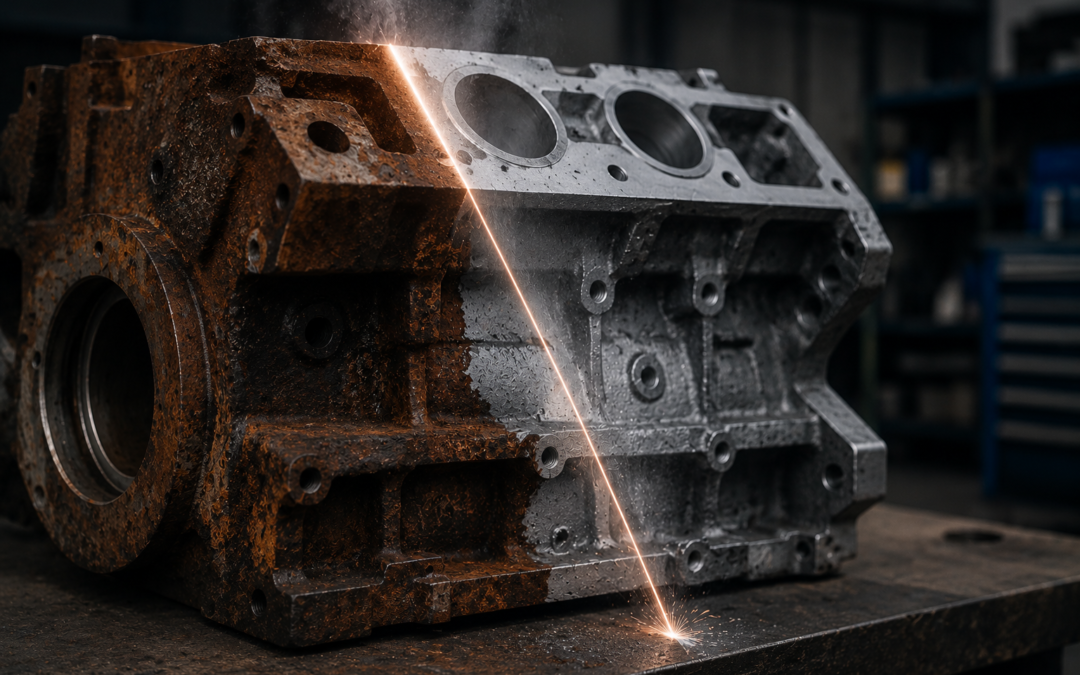
Industrial equipment is constantly exposed to contamination, corrosion, coatings and environmental wear. Cleaning these surfaces is essential for maintenance and performance, but using aggressive methods can often create additional problems.
This is why non-abrasive cleaning methods such as laser cleaning are becoming increasingly important across industrial environments.
What Is Non-Abrasive Cleaning?
Non-abrasive cleaning removes contamination without physically grinding, blasting or heavily wearing down the surface underneath.
Traditional methods such as:
- grinding
- sanding
- abrasive blasting
can remove not only rust or coatings, but also part of the original material itself.
Non-abrasive laser cleaning focuses on removing the unwanted layer while helping preserve the integrity of the base surface.
Why Surface Protection Matters
Industrial components are often expensive, difficult to replace and critical to production systems. Excessive abrasion during cleaning can:
- reduce component lifespan
- affect tolerances
- damage precision surfaces
- increase repair costs
- create unnecessary wear
For many industries, preserving the original surface is just as important as removing contamination.
Reduced Wear on Equipment
One of the biggest advantages of laser cleaning is precision.
The process allows operators to clean:
- rust
- paint
- oxidation
- grease
- contamination
without aggressive mechanical contact.
This helps minimise unnecessary wear on:
- machinery
- tooling
- metal surfaces
- automotive components
- industrial parts
Better for Precision Components
Certain industrial applications require highly controlled surface preparation.
Laser cleaning is often suitable for:
- weld preparation
- mould cleaning
- tooling restoration
- restoration work
- sensitive mechanical components
because the process can target specific areas with minimal impact on surrounding material.
Cleaner and More Controlled Process
Aggressive blasting methods often create:
- dust
- debris
- abrasive residue
- additional cleanup requirements
Laser cleaning provides a cleaner and more controlled process with reduced secondary waste.
This can improve:
- workplace cleanliness
- maintenance efficiency
- inspection visibility
- workflow organisation
Applications Across Multiple Industries
Non-abrasive laser cleaning is increasingly used across:
- manufacturing
- automotive restoration
- marine industries
- industrial maintenance
- fabrication workshops
- restoration projects
Its flexibility makes it useful for both heavy industrial work and more delicate applications.
Supporting Long-Term Maintenance
Industrial maintenance is not only about fixing problems — it is also about protecting equipment over time.
Using less aggressive cleaning methods can help businesses:
- reduce unnecessary damage
- maintain equipment quality
- improve maintenance consistency
- reduce long-term repair costs
This is one reason why laser cleaning continues to grow as a modern maintenance solution.
Final Thoughts
Non-abrasive surface cleaning offers major advantages for industries where precision, equipment protection and maintenance efficiency matter.
Laser cleaning provides a controlled and modern alternative to aggressive blasting and grinding methods, helping preserve valuable surfaces while effectively removing rust, coatings and contamination.