
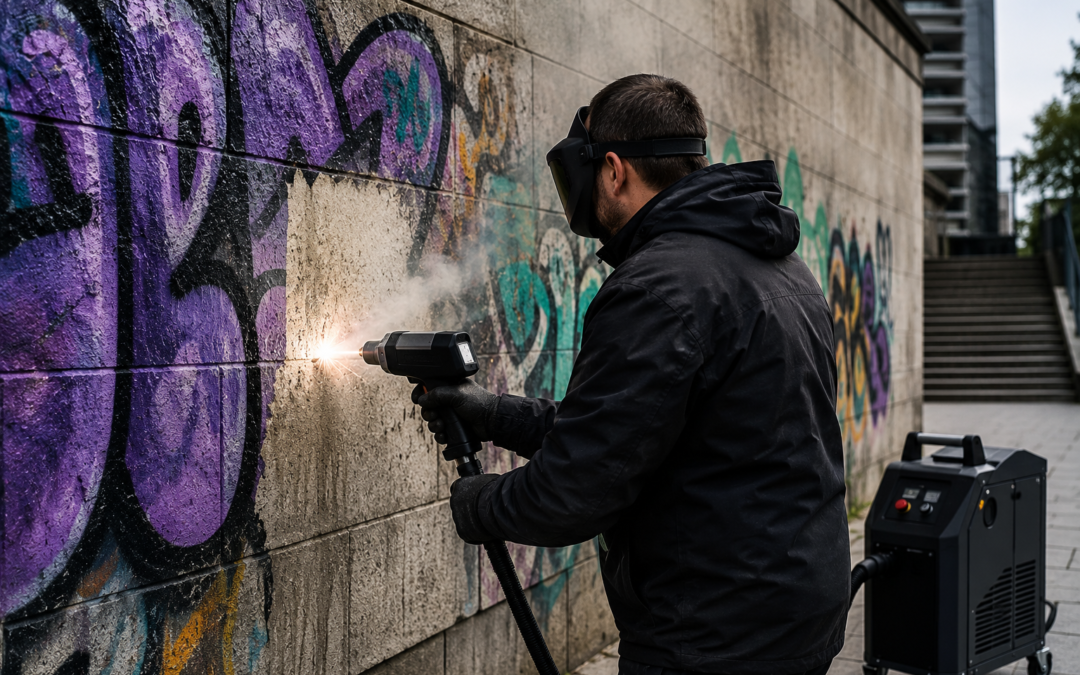
Graffiti removal can be difficult, especially on sensitive surfaces where aggressive cleaning methods may cause permanent damage. Traditional approaches often rely on chemicals, pressure washing or abrasive blasting, which may affect the original material underneath.
Laser cleaning technology is becoming an increasingly interesting solution for selected graffiti removal applications because of its precision and controlled cleaning process.
How Laser Cleaning Removes Surface Contamination
Laser cleaning works by directing concentrated laser energy onto the contaminated surface.
The unwanted layer absorbs the energy and separates from the material underneath, allowing the operator to target contamination with a high level of control.
Depending on the surface and coating type, laser cleaning may help remove:
- paint
- spray paint residue
- oxidation
- carbon contamination
- surface buildup
without excessive abrasion.
Why Graffiti Removal Can Be Challenging
Graffiti is often applied to:
- brick
- stone
- metal
- painted surfaces
- industrial structures
Some traditional cleaning methods may:
- damage the original texture
- spread paint deeper into porous surfaces
- create discoloration
- leave abrasive marks
- require harsh chemicals
This becomes especially problematic on restoration or decorative surfaces.
Advantages of Laser Cleaning for Graffiti Removal
Precision Cleaning
Laser cleaning allows operators to target specific areas more accurately than many aggressive blasting methods.
Non-Abrasive Process
Unlike grinding or heavy blasting, laser cleaning does not rely on physical abrasion to remove contamination.
Reduced Chemical Use
Laser cleaning can reduce the need for aggressive chemical products during surface restoration work.
Controlled Surface Treatment
The cleaning process can often be adjusted depending on:
- material type
- contamination level
- coating thickness
- surface sensitivity
Suitable Surfaces
Laser cleaning may be suitable for selected:
- metal surfaces
- industrial structures
- restoration projects
- stone and masonry applications
- sensitive architectural details
Surface suitability always depends on the material and type of graffiti involved.
Is Laser Cleaning Always the Best Option?
Not necessarily.
Different graffiti situations may require different cleaning methods depending on:
- surface material
- contamination depth
- coating type
- project size
- restoration requirements
For some surfaces, laser cleaning may be highly effective, while other situations may require alternative approaches or combined cleaning methods.
Restoration and Heritage Applications
One area where laser cleaning is particularly interesting is restoration work.
Because the process can be highly controlled, it may help preserve:
- stone texture
- architectural detail
- historic materials
- delicate surfaces
This is one reason why laser technology is increasingly discussed within restoration and conservation industries.
Final Thoughts
Laser cleaning offers a modern and precise approach to selected graffiti removal and surface restoration projects.
Its non-abrasive process, reduced chemical use and ability to preserve sensitive surfaces make it an attractive solution for industrial, architectural and restoration applications where surface protection is important.