
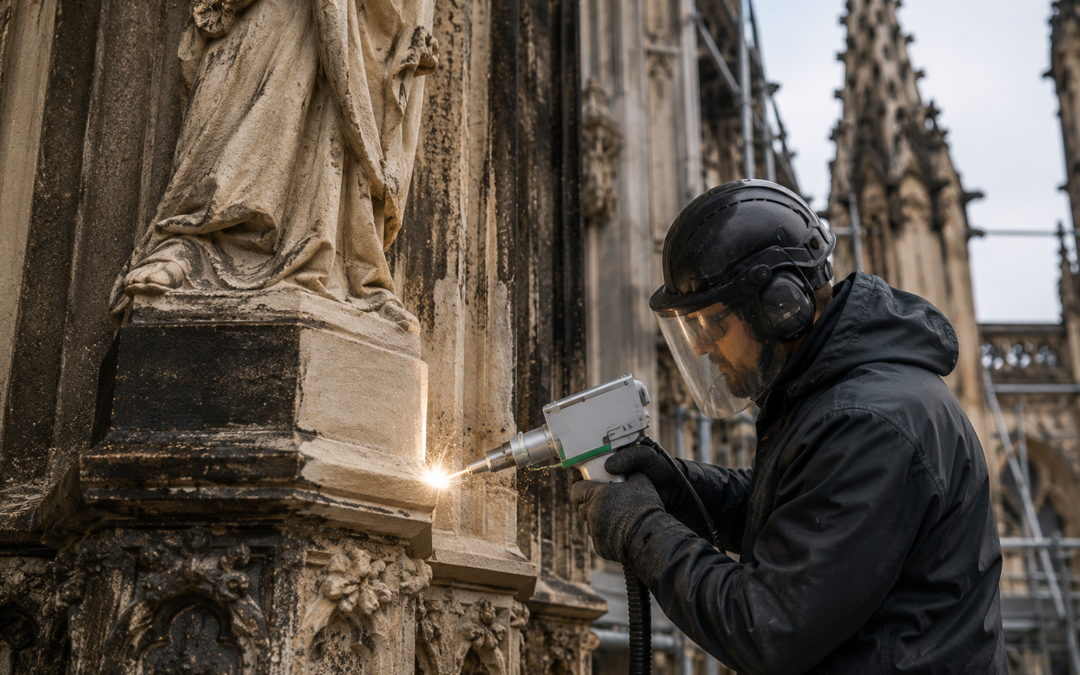
Laser cleaning is often associated with rust removal and industrial maintenance, but its applications extend far beyond metal surfaces. One of the most interesting uses of laser cleaning technology is the restoration and cleaning of stone surfaces, particularly where precision and surface preservation are critical.
From historic buildings to decorative stonework, laser cleaning is increasingly being used as a modern alternative to abrasive cleaning methods.
Why Stone Surfaces Require Special Care
Stone can be surprisingly delicate.
Many traditional cleaning methods, such as sandblasting, pressure washing, or aggressive chemical treatments, may remove contaminants but can also damage the surface itself.
Common issues include:
• Surface erosion
• Loss of fine details
• Discolouration
• Moisture penetration
• Damage to historic materials
For restoration projects, preserving the original material is often just as important as removing contamination.
How Laser Cleaning Works On Stone
Laser cleaning uses carefully controlled pulses of energy to target unwanted surface contamination.
Contaminants such as:
• Pollution deposits
• Biological growth
• Soot
• Carbon staining
• Surface coatings
• Graffiti residues
absorb the laser energy differently from the underlying stone.
This allows the contamination to be removed while minimising impact on the original substrate.
The process is highly precise and can often be adjusted to suit different stone types and conditions.
What Types Of Stone Can Be Laser Cleaned?
Laser cleaning can be used on various stone surfaces, including:
• Limestone
• Sandstone
• Granite
• Marble
• Decorative stonework
• Architectural features
• Monuments and memorials
Each project requires assessment to determine the most suitable laser settings and cleaning approach.
Benefits Of Laser Cleaning For Stone Restoration
Non Abrasive Cleaning
Unlike blasting methods, laser cleaning does not physically strike the surface with abrasive materials.
This helps preserve original textures and details.
Precision
The operator can focus on specific areas while avoiding unnecessary cleaning of surrounding surfaces.
Reduced Chemical Use
Laser cleaning can significantly reduce or eliminate the need for chemical cleaning products.
Preservation Of Historic Features
Many restoration projects involve valuable architectural details that would be difficult to protect using more aggressive cleaning techniques.
Minimal Secondary Waste
The process generates very little waste compared to traditional blasting methods.
Can Laser Cleaning Remove Graffiti From Stone?
In many cases, yes.
Laser cleaning can be highly effective for removing certain types of graffiti, paint residues, and surface contamination from stone structures.
The suitability depends on factors such as:
• Stone type
• Paint composition
• Depth of penetration
• Condition of the surface
A test area is often recommended before large scale restoration work.
Common Applications
Laser cleaning is increasingly used for:
• Historic building restoration
• Churches and monuments
• Stone facades
• Public buildings
• Memorials and statues
• Architectural conservation projects
As preservation standards continue to increase, laser cleaning is becoming a preferred option for many specialist restoration contractors.
Conclusion
Laser cleaning can be an excellent solution for cleaning and restoring stone surfaces where precision and preservation are important.
By removing contamination without abrasive contact or harsh chemicals, laser cleaning helps maintain the integrity of valuable stone structures while achieving exceptional cleaning results.