Unexpected downtime is one of the biggest problems in industrial environments. When machinery, equipment or production lines stop operating, businesses can lose time, productivity and money very quickly.
Traditional cleaning methods often increase downtime because they require disassembly, aggressive surface preparation or lengthy cleanup processes. Laser cleaning offers a faster and more controlled alternative that helps reduce interruptions during maintenance and restoration work.
What Causes Industrial Downtime?
Industrial equipment is constantly exposed to:
- rust
- oxidation
- grease buildup
- carbon deposits
- coatings
- contamination
Over time, these issues can affect:
- machine performance
- production efficiency
- maintenance access
- weld quality
- component lifespan
When maintenance becomes difficult or surfaces require extensive preparation, downtime increases significantly.
Why Traditional Cleaning Methods Slow Things Down
Methods such as grinding, chemical stripping and sandblasting often require:
- large work areas
- extensive masking
- additional cleanup
- abrasive preparation
- equipment shutdown
- component removal
In some situations, machinery may need to be partially dismantled before cleaning can even begin.
This increases labour time and delays production schedules.
How Laser Cleaning Reduces Downtime
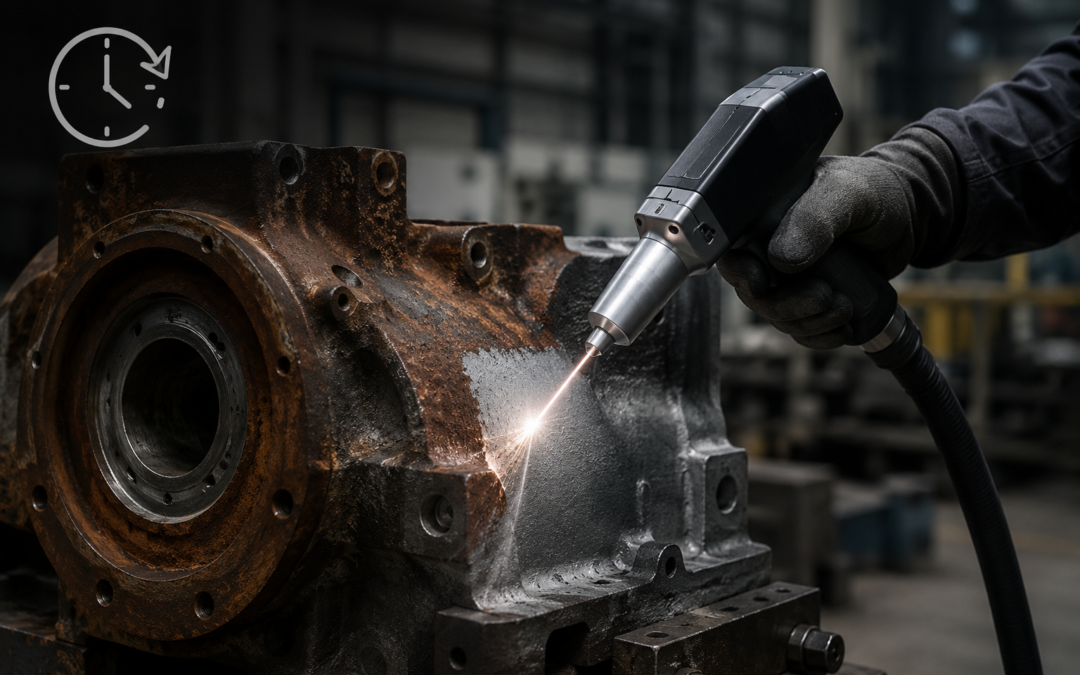
Laser cleaning is designed to provide fast and targeted surface cleaning with minimal disruption.
Because the process is highly precise, operators can clean specific areas without affecting surrounding components or surfaces.
In many industrial applications, laser cleaning can:
- reduce preparation time
- minimise cleanup
- improve access to difficult areas
- reduce equipment handling
- speed up maintenance work
This allows businesses to return machinery and production systems to operation more quickly.
Non-Abrasive Cleaning Means Less Damage
Aggressive cleaning methods can create additional wear on industrial components.
Laser cleaning removes contamination without physically grinding the surface, helping preserve:
- material thickness
- surface detail
- precision components
- sensitive equipment
This is particularly important for machinery and parts where excessive abrasion could increase repair costs or shorten component lifespan.
Common Industrial Applications
Laser cleaning is increasingly used across:
- manufacturing facilities
- fabrication workshops
- maintenance departments
- automotive industries
- marine industries
- restoration projects
Typical applications include:
- weld preparation
- rust removal
- machinery cleaning
- tooling restoration
- paint stripping
- coating removal
Its flexibility makes it useful for both routine maintenance and specialist restoration work.
Cleaner Working Environment
Another advantage of laser cleaning is reduced secondary waste.
Compared to abrasive blasting methods, laser cleaning generates:
- less dust
- less debris
- fewer consumables
- reduced cleanup requirements
This can help create a cleaner and more controlled maintenance environment.
Mobile Laser Cleaning Services
Mobile laser cleaning services allow industrial cleaning and maintenance work to be carried out directly on-site.
This can help reduce:
- transportation requirements
- equipment handling
- workshop delays
- production interruptions
PUREBEAM provides mobile laser cleaning services across Southampton and surrounding areas for industrial, automotive and restoration applications.
Final Thoughts
Reducing downtime is critical for businesses that rely on machinery, production systems and industrial equipment.
Laser cleaning offers a modern and efficient solution for rust removal, contamination cleaning and surface preparation while helping minimise disruption during maintenance work. Its precision, speed and non-abrasive process make it an increasingly valuable tool across multiple industries.