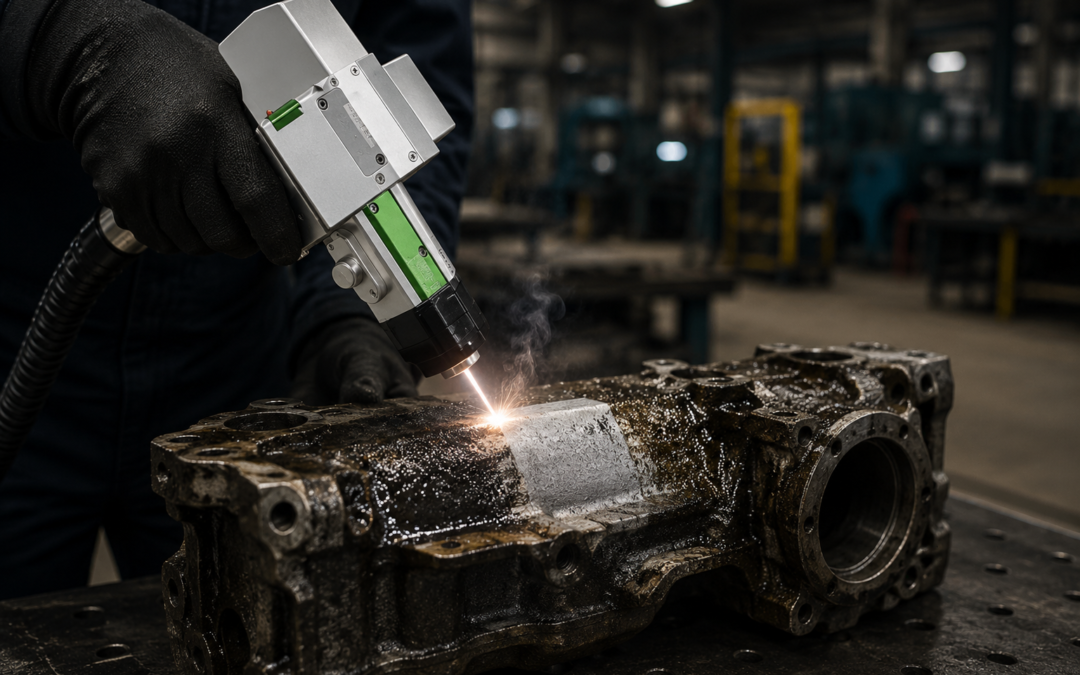
Laser cleaning is widely known for removing rust, paint, and oxidation, but many people are surprised to learn that it can also be highly effective at removing oil, grease, carbon deposits, and other surface contaminants. As industries continue to seek cleaner and more efficient maintenance solutions, laser cleaning is becoming an increasingly popular choice for surface preparation and equipment restoration.
Why Surface Contamination Is a Problem
Contaminants such as oil, grease, lubricants, and industrial residues can cause serious issues in manufacturing and maintenance environments.
Common problems include:
• Poor weld quality
• Reduced coating adhesion
• Increased equipment wear
• Contamination of production processes
• Reduced inspection accuracy
• Safety hazards in industrial environments
Before painting, welding, bonding, or inspection, surfaces often need to be thoroughly cleaned to ensure optimal performance.
How Laser Cleaning Removes Contaminants
Laser cleaning works through a process known as laser ablation.
When the laser beam is directed onto a contaminated surface, the unwanted material absorbs the laser energy more efficiently than the base material underneath. The contamination rapidly heats up, vaporises, or breaks apart and is removed from the surface.
Depending on the application, laser cleaning can remove:
• Oil residues
• Grease deposits
• Carbon build up
• Soot contamination
• Industrial pollutants
• Oxidation layers
• Light coatings and residues
The underlying metal or substrate remains largely unaffected when the correct laser settings are used.
Can Laser Cleaning Remove Heavy Grease?
Yes, but results depend on the thickness and type of contamination.
Light and moderate grease contamination can often be removed effectively using laser cleaning. In cases involving extremely thick deposits, a combination of pre cleaning and laser treatment may be recommended to achieve the best results.
Industrial facilities often use laser cleaning as part of a broader maintenance strategy to remove accumulated contamination from machinery and production equipment.
Advantages Over Traditional Cleaning Methods
No Chemicals Required
Traditional degreasing often relies on solvents and chemical cleaners. Laser cleaning eliminates the need for many of these products, helping reduce environmental impact and disposal requirements.
Minimal Secondary Waste
Unlike abrasive blasting or chemical cleaning, laser cleaning generates very little secondary waste. Only the removed contamination needs to be managed.
Precise Cleaning
The laser can target specific areas without affecting surrounding components, making it ideal for complex machinery and sensitive equipment.
Reduced Downtime
Many cleaning tasks can be completed quickly on site, reducing equipment downtime and improving productivity.
Industries That Use Laser Cleaning for Contamination Removal
Laser cleaning is increasingly used across multiple sectors, including:
• Manufacturing
• Automotive restoration
• Aerospace maintenance
• Food production equipment maintenance
• Marine engineering
• Heavy industry
• Power generation facilities
The ability to clean surfaces without abrasives or chemicals makes laser technology attractive in environments where precision and reliability are critical.
Is Laser Cleaning Suitable for Surface Preparation?
Absolutely.
Removing oil, grease, and contaminants is often one of the most important stages of surface preparation before:
• Welding
• Painting
• Coating application
• Adhesive bonding
• Non destructive testing
• Equipment inspection
A properly cleaned surface improves process reliability and helps achieve higher quality results.
Conclusion
Laser cleaning is not limited to rust and paint removal. It can also effectively remove oil, grease, carbon deposits, and other contaminants that affect industrial equipment and metal surfaces.
By providing precise, chemical free cleaning with minimal waste, laser cleaning offers a modern solution for businesses seeking safer, cleaner, and more efficient maintenance methods.