
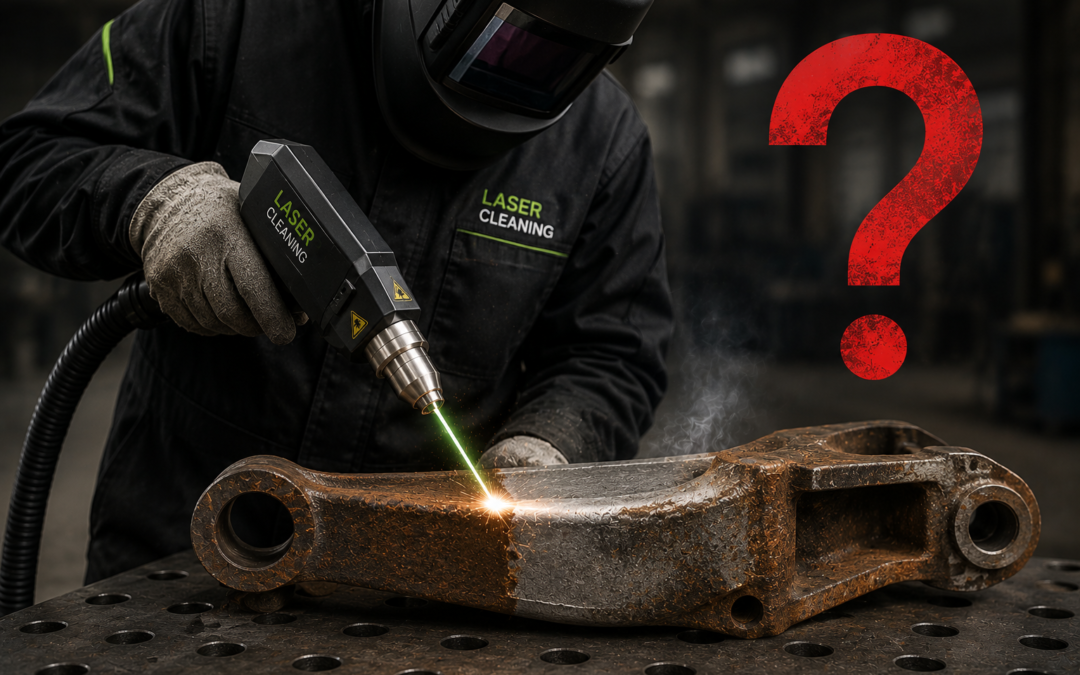
One of the most common questions businesses and vehicle owners ask before using laser cleaning services is whether the process is safe for the surface underneath.
Because laser cleaning uses concentrated energy instead of abrasive blasting or harsh chemicals, many people assume the process may damage metal or weaken components. In reality, properly configured laser cleaning is designed to target contamination while preserving the original surface.
How Laser Cleaning Works
Laser cleaning removes rust, paint, oxidation and contamination by directing controlled laser pulses onto the surface.
The unwanted layer absorbs the laser energy and breaks away from the material underneath. Since the process is highly precise, the operator can control:
- intensity
- pulse settings
- cleaning speed
- treatment area
This allows contamination to be removed without excessive abrasion or physical grinding.
Does Laser Cleaning Damage Metal?
When performed correctly using the appropriate settings, laser cleaning is considered a non-abrasive cleaning method.
Unlike aggressive blasting techniques, laser cleaning does not rely on physical friction to remove contamination. This helps preserve:
- surface detail
- material thickness
- structural integrity
- original finish
This is one of the main reasons laser cleaning is increasingly used for restoration and precision industrial work.
Automotive Applications
Laser cleaning is becoming more popular in automotive restoration because it allows rust and contamination to be removed from metal parts without excessive surface wear.
It can be used on:
- chassis components
- suspension parts
- engine components
- brake assemblies
- wheels and frames
Many restoration projects require precision and surface preservation, especially when working with older or sensitive parts.
Industrial Surface Cleaning
Industrial equipment often requires maintenance cleaning without damaging expensive machinery or production components.
Laser cleaning may assist with:
- machinery restoration
- weld preparation
- oxidation removal
- coating removal
- tooling and mould cleaning
Because the process is highly controlled, it can focus on targeted areas while minimising impact on surrounding surfaces.
Is Laser Cleaning Safer Than Sandblasting?
Traditional abrasive methods such as sandblasting physically impact the surface to remove contamination. While effective in some applications, they may:
- remove base material
- create rough finishes
- produce large amounts of dust
- increase cleanup requirements
Laser cleaning offers a cleaner and more precise alternative for many restoration and maintenance projects.
Proper Operation Is Important
Like any industrial equipment, laser cleaning systems must be operated correctly and safely.
Professional laser cleaning services typically use:
- protective equipment
- safety eyewear
- controlled work areas
- correct machine settings
- surface assessment before cleaning
The effectiveness and safety of the process depend heavily on operator experience and proper setup.
Final Thoughts
Laser cleaning is widely recognised as a modern, non-abrasive solution for rust removal, surface restoration and industrial maintenance.
When used correctly, it can safely clean a variety of industrial and automotive surfaces while preserving the original material underneath. This combination of precision, efficiency and reduced surface damage is one of the reasons laser cleaning continues to grow across multiple industries.