
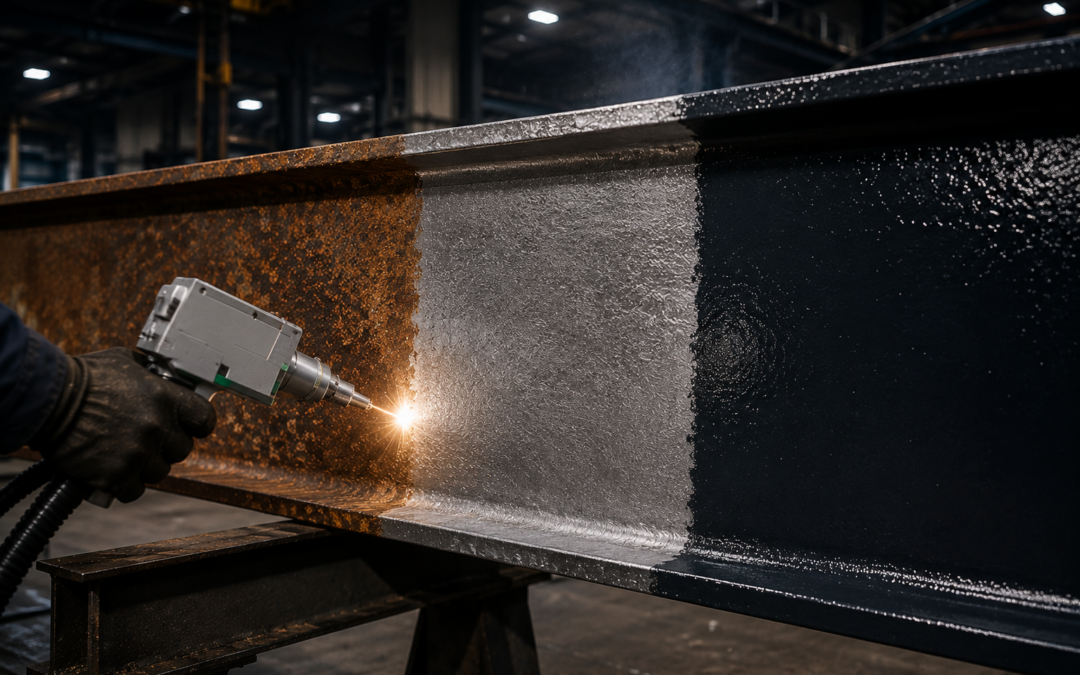
Many people assume that laser cleaning only removes existing rust. While that is its primary function, laser cleaning can also play an important role in helping prevent future corrosion when combined with proper surface protection.
Understanding how rust forms and how laser cleaning prepares a surface can help explain why this technology is becoming increasingly popular in restoration, manufacturing, and industrial maintenance.
Why Rust Returns After Cleaning
Rust forms when iron reacts with oxygen and moisture.
Even after rust has been removed, the metal remains vulnerable if it is left exposed to the environment.
Factors that accelerate corrosion include:
• Rain and moisture
• Humidity
• Salt exposure
• Industrial pollution
• Temperature fluctuations
Without protection, freshly cleaned steel can begin developing surface oxidation surprisingly quickly.
How Laser Cleaning Removes Rust
Laser cleaning removes rust through a process known as laser ablation.
The laser energy is absorbed by the corrosion layer, causing it to break away from the metal surface while leaving the underlying material largely unaffected.
Unlike abrasive blasting methods, laser cleaning allows precise removal of corrosion without unnecessary damage to the substrate.
Why Surface Preparation Matters
One of the most important factors in corrosion prevention is surface preparation.
Protective coatings perform best when applied to a clean, uncontaminated surface.
Laser cleaning effectively removes:
• Rust
• Oxidation
• Dirt
• Oil
• Grease
• Previous coating residues
This creates an ideal surface for primers, paints, and protective treatments.
Does Laser Cleaning Create A Better Surface For Coatings?
In many applications, yes.
Poor surface preparation is one of the most common causes of coating failure.
If contamination remains on the surface, paint or protective coatings may not bond properly.
Laser cleaning helps improve coating adhesion by exposing clean metal beneath the contamination.
This can contribute to longer lasting protection and reduced maintenance requirements.
How To Protect Metal After Laser Cleaning
Once the surface has been cleaned, protection should be applied as soon as practical.
Common options include:
Protective Primers
Industrial primers create a barrier between the metal and the environment.
Paint Systems
Modern coating systems provide long term protection against moisture and corrosion.
Powder Coating
Often used for components requiring durable finishes.
Corrosion Inhibitors
Specialised treatments can help slow oxidation in certain environments.
Oil Or Protective Film
Temporary protection may be suitable during storage or transportation.
Industries That Benefit From Rust Prevention
Many sectors use laser cleaning as part of a wider corrosion management strategy.
Examples include:
• Automotive restoration
• Structural steel maintenance
• Marine applications
• Manufacturing
• Agricultural equipment
• Industrial machinery
• Heritage restoration
Reducing corrosion helps extend equipment life and lower maintenance costs.
Is Laser Cleaning Better Than Sandblasting For Rust Removal?
Both methods can remove rust, but laser cleaning offers several advantages when surface preservation is important.
Benefits include:
• No abrasive media
• Minimal waste
• Precise cleaning
• Reduced cleanup
• Better control over material removal
This makes laser cleaning particularly attractive for sensitive components and restoration projects.
Conclusion
Laser cleaning itself does not permanently stop rust from returning.
However, by removing corrosion thoroughly and creating an ideal surface for protective coatings, laser cleaning plays a critical role in long term rust prevention strategies.
When combined with proper surface protection, laser cleaned metal can remain protected for many years while maintaining its original integrity and appearance.